
 631-388-6640
How to Flip Houses: A Step-by-Step Guide for Beginners
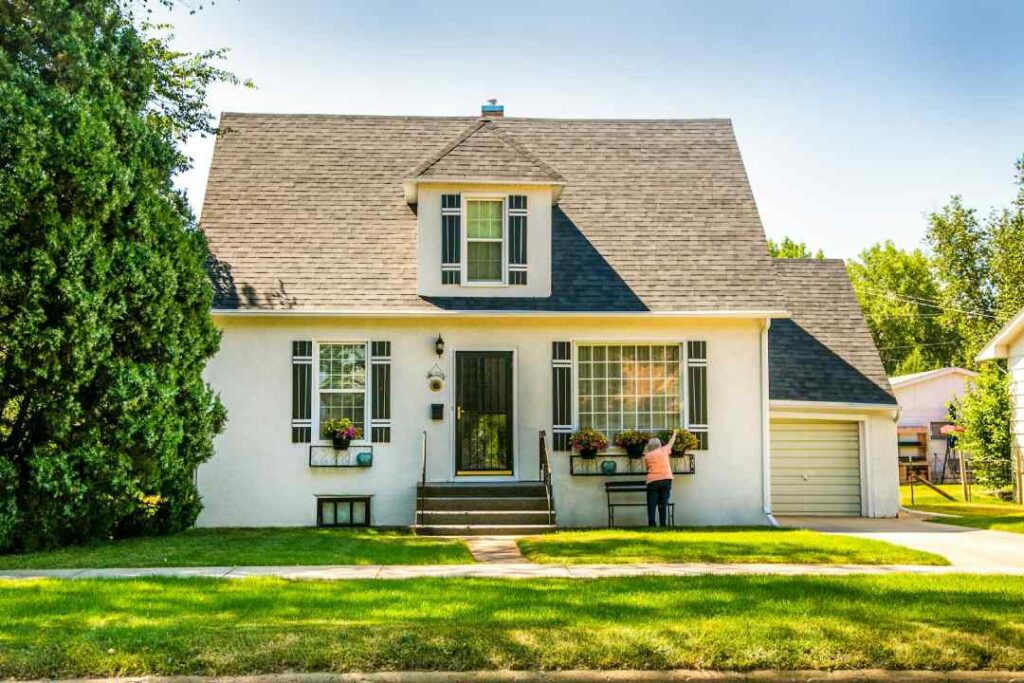
House flipping looks effortless on TV — buy an ugly house, renovate it over a montage, and pocket a fat check. Real fix-and-flip investing is a numbers business, and the flippers who profit consistently treat it like one. Get the math right and you can build real income; get it wrong and holding costs, tax bills, and a bad renovation can wipe out a year’s work.
This guide breaks down how to flip houses the right way: the step-by-step process, the 70% rule, how to find and finance deals, what it actually costs and earns in 2026, the tax realities, and what’s unique about flipping houses in New York.
What Is House Flipping?
House flipping — also called fix-and-flip real estate — is the practice of buying a property below market value, renovating it, and reselling it for a profit within a relatively short window, often a few months to a year. The goal is simple to state and hard to execute: buy low, add value through smart renovations, and sell for more than your total costs. Unlike buy-and-hold investing, flipping is about a quick, active turnaround rather than long-term rental income.
Is Flipping Houses Still Profitable in 2026?
Yes — but margins are tighter than the TV version suggests, and 2026 is a disciplined operator’s market. According to industry data from ATTOM, the typical U.S. flip in recent reporting bought at roughly $259,000 and resold around $325,000, producing an average gross profit of about $66,000 and a return of roughly 25%. That sounds great until you understand a crucial distinction: gross profit is not take-home profit. It excludes renovation costs, loan interest, insurance, property taxes, utilities, and sales commissions — expenses that typically consume 20% to 33% of a home’s after-repair value.
With higher interest rates, pricier labor, and tight inventory, flip margins recently hit their lowest point in nearly two decades. The takeaway isn’t “don’t flip” — it’s “underwrite carefully, keep real cash reserves, and be willing to walk away from deals that don’t pencil.”
How to Flip Houses in 8 Steps
Step 1: Set your budget and get financing lined up first
Before you look at a single property, know how much capital you have and how you’ll fund a deal. Flipping requires money for the purchase, the renovation, and several months of holding costs — plus a contingency cushion for surprises. Getting pre-approved with a lender (or confirming your cash position) before you shop means you can move fast when a good deal appears, which is often what wins it.
Step 2: Build your team
Flipping is a logistics business, not a solo DIY project. Assemble your core team early: a real estate agent who knows the investor market and can pull comps, a reliable licensed contractor (get multiple bids), a lender or private money source, and — especially in New York — a real estate attorney. A good inspector and, over time, a network of trades round it out. Your team’s speed and quality directly determine your profit.
Step 3: Find the right property
This is the hardest part of flipping, full stop. In today’s market, only a small fraction of publicly listed homes pencil out as a profitable flip, and every other investor is watching the same MLS feed. The flippers closing multiple deals a year source most of them off-market — through wholesalers, cash-buyer networks, direct-mail campaigns, driving for dollars, auctions, and relationships with local buyers who control distressed inventory. Distressed, vacant, inherited, and as-is properties are the raw material of a good flip.
Step 4: Analyze the deal with the 70% rule
Once you find a candidate, run the numbers before you fall in love with it. The 70% rule is the industry’s quick sanity check: pay no more than 70% of the property’s after-repair value (ARV), minus estimated repair costs.
Formula: Maximum Allowable Offer (MAO) = (ARV × 0.70) − repair costs.
Example: If comparable renovated homes nearby sell for $400,000 (your ARV) and the property needs $60,000 in repairs, your maximum offer is ($400,000 × 0.70) − $60,000 = $220,000. That roughly $120,000 spread between your offer and the ARV is not your profit — it’s the bucket that absorbs financing, holding, closing costs, commissions, surprises, and, finally, your margin.
Nail your two inputs: ARV (based on comps — fully renovated homes in the immediate area sold in the last 3–6 months, using the median rather than the best case) and your repair estimate (get contractor bids, don’t guess). If either number is wrong, the rule fails you. Many beginners use a stricter 65% to build in more safety.
Step 5: Secure funding and buy
With an accepted offer, finalize your financing (more on options below), complete due diligence and inspections, and close. Run a title search to surface liens, and in New York, expect an attorney-driven closing.
Step 6: Renovate smart
Define your scope of work up front and budget it line by line with a contingency of 10–20% for the surprises that always appear. Focus spending on the renovations that actually move resale value — kitchens, bathrooms, flooring, paint, and curb appeal for your house — and avoid over-improving beyond what the neighborhood comps support. Manage your contractor tightly; every week of delay costs you money.
Step 7: Control holding costs and timeline
Holding costs are the number beginners underestimate most. Every month you own the property you’re paying interest, taxes, insurance, and utilities. On a $200,000 hard money loan at 10–12%, interest alone runs roughly $1,700–$2,000 per month — so a project that runs two months over schedule can quietly cost you $3,400–$4,000 in extra interest before anything else. Speed is profit.
Step 8: Sell (or choose another exit)
Price to your real comps, stage the home to show well, and market it aggressively to trigger competitive offers. If the market shifts and a resale won’t hit your numbers, know your backup exits — renting it out, refinancing (the BRRRR approach), or selling as-is to another investor — so you’re never forced into a fire sale.
How Much Does It Cost — and How Much Can You Make?
Beyond the purchase price, budget for: renovation costs, financing (interest + lender points), holding costs (taxes, insurance, utilities), closing costs on both the buy and the sell, agent commissions, and taxes on your profit. A realistic first flip often nets $30,000–$50,000 of that 70% rule spread — if everything goes right. On a first deal, something usually won’t, which is exactly why the margin cushion and cash reserves matter. Fall in love with the numbers, not the house.
Financing Options for Flipping Houses
- Cash: The ideal. No interest or loan fees, fastest closings, maximum margin — but ties up significant capital.
- Hard money loans: Short-term loans from private lenders based mainly on the deal’s ARV rather than your credit. They fund fast (often 7–14 days) and typically cover 70–90% of purchase plus repairs, but carry high interest (roughly 10–15%) and points (2–5% upfront). The standard tool for many flippers.
- Private money: Loans from individuals in your network, with terms you negotiate directly.
- HELOC / home equity: Tapping equity in a home you already own to fund a flip — cheaper than hard money, but it puts your own property at risk.
Taxes on Flipping Houses
Taxes are where inexperienced flippers get blindsided. Profits from an active flip are generally not taxed at the favorable long-term capital gains rate. If you flip regularly, the IRS typically treats you as a dealer running a business, meaning profits are taxed as ordinary income (federal rates up to 37%) plus a 15.3% self-employment tax, on top of any state income tax — which is significant in high-tax New York. A property held less than a year is also short-term. All told, many flippers lose 30% to 40% of their profit to taxes, so build that into every deal from the start and work with a tax professional. (The Section 121 primary-residence exclusion applies only if you actually live in the home for two of five years — that’s not a flip.)
Flipping Houses in New York: What to Know
Flipping houses in New York — including Long Island — offers strong resale values, but it’s one of the more challenging and expensive markets in the country, best approached with experience, careful underwriting, and healthy reserves.
- High acquisition costs and fierce competition. Entry prices are steep and off-market deal sourcing is essential; profitable listed deals are scarce and heavily contested.
- Transfer taxes eat into margins. New York State charges a transfer tax on sales, and New York City layers on additional city transfer taxes (combined roughly 1.8%+ in NYC), plus a “mansion tax” on higher-value sales. These are charged on the gross sale price — whether or not the deal made money.
- Don’t confuse the co-op “flip tax.” In NYC, many co-op buildings charge a separate transfer fee (often 1–3% of the sale price) called a flip tax — a building fee, distinct from income taxes on flipping and from state/city transfer taxes.
- Attorney closings and higher closing costs. New York is an attorney-closing state, so budget for legal fees on both ends.
- High state income tax. New York’s income tax tops out around 10.9% for high earners, and it applies to your flip profit as ordinary income.
- Watch pending legislation. Lawmakers have proposed measures (such as the “End Toxic Home Flipping Act”) that would add a tax on quick resales of 1–3 unit residential properties in NYC, with certain exemptions. It’s proposed rather than settled law, so confirm current status before you buy.
For Long Island investors, the winning formula is the same: source distressed properties off-market, underwrite conservatively against real comps, and control your renovation timeline.
Home Flipping Tips for Beginners
- Fall in love with the numbers, not the property. Emotion is the enemy of a profitable flip.
- Overestimate repairs and time; underestimate ARV. Conservative inputs protect you.
- Keep real cash reserves. Surprises are guaranteed; reserves keep them from becoming disasters.
- Start in a market you know. Local knowledge beats a “hot market” you don’t understand.
- Build relationships for deal flow. Your next flip usually comes from your network, not the MLS.
- Have a backup exit for every deal before you buy.
Common House Flipping Mistakes to Avoid
- Underestimating holding costs and timelines — the silent profit killer.
- Getting the ARV wrong by pricing to the best comp instead of the median.
- Skipping the contingency budget for renovation surprises.
- Over-improving beyond what the neighborhood supports.
- Ignoring taxes until it’s too late to plan for them.
- Refusing to walk away from a deal that no longer pencils.
Finding Deals and Exits: How MrCashBuyer Can Help
The hardest part of flipping isn’t the renovation — it’s finding a property cheap enough to make the numbers work. That’s where a local cash buyer becomes a valuable connection.
And if you’re reading this from the other side — you own a property that needs work and, after doing the math, decided a flip isn’t worth the risk, cost, and months of effort — we can help there too:
MrCashBuyer works with distressed, vacant, inherited, and as-is properties across New York and Long Island — exactly the kind of homes that make good flip candidates. If you’re an investor hunting for off-market opportunities in the area, it’s worth getting on our radar. And if you’re looking to sell your inherited property instead of renovating it yourself, we buy directly from heirs too, so it’s a connection worth making from either side of the deal.
- We buy as-is. No repairs, no renovations, no cleanout.
- No commissions or hidden fees, and we cover typical closing costs.
- Close on your timeline — in as little as seven days.
- A fair, no-obligation cash offer.
Whether you’re sourcing your next flip or you’d rather sell a fixer than renovate it yourself, reach out to MrCashBuyer at 631-388-6640 or get in touch online.
Final Thoughts
Learning how to flip houses comes down to mastering four pillars: the math (the 70% rule and accurate ARV), the money (financing and holding costs), the team, and the discipline to walk away from bad deals. The investors who profit consistently treat flipping like the small business it is — conservative underwriting, real reserves, tight renovation management, and a clear-eyed view of taxes and market conditions, especially in a high-cost state like New York.
Do that, and fix-and-flip real estate can be a genuine path to building wealth. Rush it, and the holding costs and tax bills will remind you why the numbers always come first.
Frequently Asked Questions
How much money do you need to start flipping houses?
Less than most people assume, but not nothing. Many first flips use a hard money loan covering 70–90% of purchase plus repairs, with the investor supplying the rest plus reserves. Even with financing, you’ll need cash for the down payment, closing costs, holding costs, and a contingency cushion.
What is the 70% rule in house flipping?
It’s a quick sanity check: pay no more than 70% of a property’s after-repair value (ARV) minus estimated repairs. So on a $400,000 ARV with $60,000 in repairs, your maximum offer is about $220,000. It’s a starting guideline, not a profit guarantee — you still have to account for financing, holding, closing, and tax costs.
Is flipping houses profitable in 2026?
It can be, but margins are tighter than in past years. Recent data shows an average gross profit around $66,000 per flip, though take-home is meaningfully lower after renovation, financing, holding, and tax costs. Success in 2026 depends on disciplined underwriting and controlling expenses.
How are house flipping profits taxed?
Usually as ordinary income, not long-term capital gains. Frequent flippers are often treated as dealers, owing ordinary income tax plus 15.3% self-employment tax and any state income tax. Many flippers lose 30–40% of profit to taxes, so plan for it early with a tax professional.
How do I find houses to flip?
The best deals are usually off-market — sourced through wholesalers, cash-buyer networks, direct mail, auctions, and local relationships — because profitable on-market listings are scarce and heavily contested. Distressed, vacant, and inherited properties are prime candidates.
Is it hard to flip houses in New York?
New York, including Long Island, is a high-cost, highly competitive market with steep transfer taxes, attorney closings, and high state income tax. It offers strong resale values but demands experience, conservative math, and solid cash reserves — and success hinges on sourcing discounted, off-market properties.
What’s the biggest mistake beginner flippers make?
Underestimating costs — especially holding costs, renovation overruns, and taxes — and getting emotionally attached to a property. The fix is simple to say and hard to practice: fall in love with the numbers, budget a contingency, and be willing to walk away.