
 631-388-6640
How to Sell My House Fast: The Three Clocks That Decide It
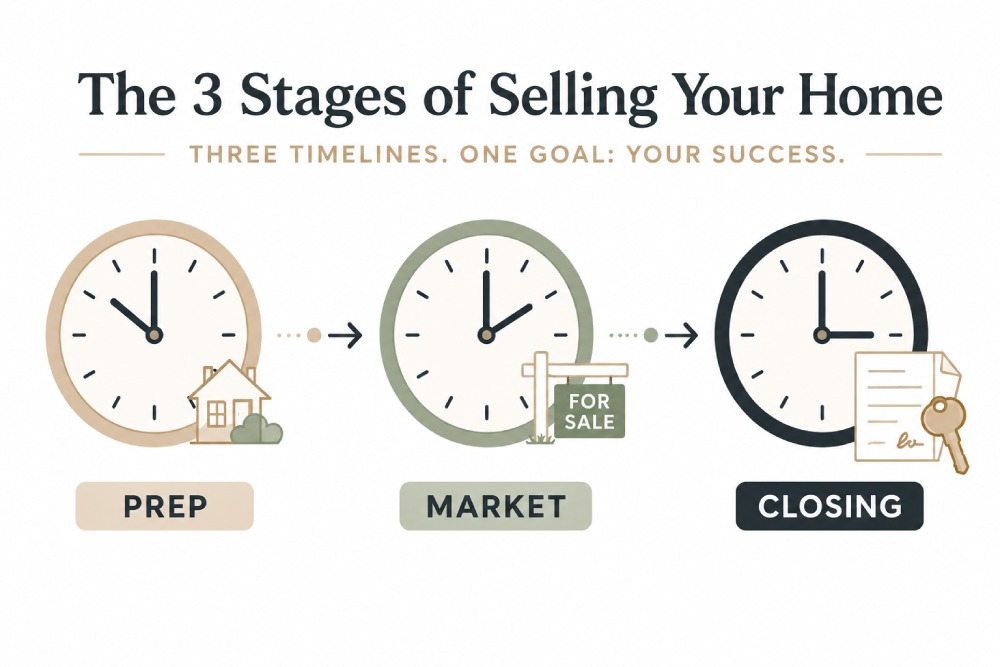
Every home sale runs on three clocks. First prep, then time on the market, then contract-to-close. A typical listed sale takes two to four months even when the house “sells in a week,” because closing alone runs about 30 days with a financed buyer. To sell faster, price right on day one, fix the cheap stuff, make showings effortless, and skip big renovations. When your deadline is measured in days, a cash buyer compresses all three clocks into one or two weeks.
If you’ve been searching “how to sell my house fast,” you’ve probably found the same recycled list twenty times: clean up, take nice photos, price it well, be patient. Fine advice. Also incomplete. We’ve bought more than 1,000 houses across Long Island over nearly 20 years, most of them from people on a deadline, and here’s what that experience teaches you: most speed advice only shrinks one of the three clocks that control your sale.
Those three clocks: prep, market time, closing. Zillow’s data shows the average home spends about a month on the market and then another month or more getting to closing, and that’s after however long you spent painting and packing. A house that “sold in five days” still took two months to put money in the seller’s hand.
This guide covers all three clocks: how to shrink each one on the open market, what quietly slows sales down, what’s different in New York, and when skipping the market entirely is the honest answer. Let’s get into it.
How Long Does It Take to Sell a House?
A typical home sale takes two to four months from decision to cash in hand. Prep and staging take one to four weeks. The listing then spends roughly a month on the market, and contract-to-close adds about 30 more days with a financed buyer. “Fast” means attacking all three stages, not one.
Here’s where the time actually goes:
- The prep clock (1 to 4 weeks, sometimes more). Repairs, cleanouts, painting, photos, and paperwork. Sellers consistently underestimate this one, especially on a house with years of accumulated stuff.
- The market clock (about a month on average). Bankrate puts the recent national average around 29 days on market, with Redfin’s median for single-family homes closer to 40. Hot houses go faster. Overpriced ones sit far longer.
- The closing clock (about 30 to 45 days). Once you accept a financed offer, the buyer’s lender takes over your calendar. NAR data shows contracts typically take about 30 days to close, and that assumes nothing goes sideways.
That last clock hides the biggest risk in the whole process. The same NAR data shows 6% of contracts get terminated and another 13% run into delayed settlements. In plain terms, roughly 1 in 5 deals either dies or slips. When you’re selling on a deadline, that possibility deserves more respect than any staging tip.
First, Know Your Real Deadline
The best way to sell a house quickly depends entirely on your deadline. Need cash within two weeks? Only a direct cash sale gets there. Have one to three months? An aggressively priced, well-prepped listing can work. No hard deadline? A standard listing will usually earn you the most money.
We ask every seller who calls us one question first: what date matters, and what happens if you miss it? The answer sorts everything.
Days matter (a closing date, an auction, a move you can’t push). The open market can’t help you. Even a perfect listing needs the market clock and the closing clock, and you don’t have either. A cash buyer is the tool for this tier.
Weeks matter (relocation, carrying two mortgages, a life change). You can list, but every choice must serve speed: sharp pricing, total showing access, zero experiments, and no big projects. The tips in the next section are written for you.
Months are fine. Breathe. Prep properly, list in a strong window, and hold out for the best offer. Speed tactics still help, but you can afford to prioritize price.
Be honest with yourself about which tier you’re in. The most expensive mistakes we see come from sellers in the days tier trying to run a months-tier playbook, burning eight weeks on a listing before making the call they could’ve made in week one.
How to Sell Your House Fast on the Open Market: 8 Moves That Work
Selling a house fast on the open market comes down to pricing at market value from day one and removing every reason for a buyer to hesitate, from cluttered photos to restricted showings. The first two weeks of the listing decide almost everything, so front-load the effort.
After two decades of watching listings from the buyer’s side, these are the eight moves that genuinely move the clock.
- Price it right on day one, not eventually. Buyers sort by newest listings, and your house gets maximum attention in week one. Overprice, and that attention evaporates. Worse, a listing that sits and then cuts its price looks damaged even when it isn’t. Starting at market value beats starting high and “testing” every single time.
- Hire an agent who moves at your speed. Interview more than one, and ask each the same question: what’s your plan for the first 14 days? NAR’s data shows agent-assisted homes sold at a median of $425,000 versus $360,000 for sale-by-owner, so skipping the agent to save time usually costs more than it saves.
- Do the cheap fixes, skip the projects. Agents’ top pre-listing advice is decluttering (91%), deep cleaning (88%), and curb appeal (77%), and we agree from the buying side. A $400 weekend of cleanup changes how a house shows. A $40,000 kitchen renovation just adds six weeks to your prep clock and rarely pays back at closing.
- Win the first ten photos. Buyers scroll listings the way they scroll everything else, and the decision to book a showing happens on a phone screen. Hire a real photographer, shoot on a bright day, and lead with the best rooms. Dark, cluttered photos are the fastest way to sell slowly.
- Stage the rooms that count, or at least empty them. In NAR’s staging report, 49% of sellers’ agents said staging cut time on the market. Focus on the living room and primary bedroom. If full staging isn’t in the budget, an empty clean room beats a full personal one.
- Be brutally easy to show. Lockbox on the door, flexible hours, no 24-hour notice requirements. Every declined showing is a buyer who may buy something else this weekend. Yes, living show-ready is a pain. It’s a temporary pain that shortens the market clock directly.
- Time the launch if your deadline allows. Zillow’s research found homes listed in late May sold for about 1.6% more, and spring listings generally move faster. Don’t wait half a year for a magic week, but if you’re listing in late April anyway, three more weeks of patience can pay.
- Clear the friction before buyers find it. Gather your survey, permits, warranties, and disclosure paperwork now. In New York, line up your attorney before you list, not after you accept an offer. Every document you produce in an hour instead of a week keeps the closing clock honest.
Notice what’s not on the list: gimmicks. Buyer incentive credits, “coming soon” teasers, drone videos, open house balloons. In our experience none of it outruns the two fundamentals, which are price and presentation. Nail those and the rest is decoration.

What Slows a Sale Down: A Buyer’s Confession
The biggest speed killers are overpricing, visible deferred maintenance, restricted showings, and financing risk you accepted without noticing. Buyers form a verdict in the first weekend a listing is live. After that window, every additional week on the market makes them wonder what’s wrong with the house.
We’re the people walking through the houses, so let us tell you what actually happens on the other side of your listing.
Buyers smell deferred maintenance before they see it. A musty basement or a water stain on one ceiling tile doesn’t read as “small fix.” It reads as “what else did they ignore?” and the mental discount buyers apply is always bigger than the repair bill. Homes that stayed on top of upkeep sell weeks faster, which is exactly why we tell owners to work through a seasonal home maintenance guide long before they ever think about listing.
The second killer is the appraisal you forgot about. You can negotiate a great price with an excited buyer, and then their lender’s appraiser values the house lower. Now the deal renegotiates or dies at week four of the closing clock. NAR reports 7% of contracts get delayed by appraisal issues alone. Cash offers skip the appraisal entirely, which is a bigger deal than most sellers realize.
The third is the chain. Your buyer needs to sell their house to buy yours, and their buyer needs a mortgage, and somewhere in that chain a loan officer goes on vacation. Every link you accept adds someone else’s timeline to your own. On a deadline, a slightly lower offer with no chain and no financing beats a higher offer wearing both.
Selling a House Fast in New York: The Parts You Can’t Skip
New York sales run slower than the national playbook because attorneys handle every closing, contracts take days to sign rather than hours, transfer taxes add paperwork, and municipal searches surface old permits. You can’t remove these steps, but you can prep for them, and preparation is where New York sellers win back the most time.
A few local realities we work with every week on Long Island:
- Both sides need attorneys. Nothing is binding until contracts are signed, which normally takes days after an accepted offer while attorneys review. Hire yours before listing and you’ll skip the scramble.
- Transfer tax is real money and real paperwork. New York State charges a real estate transfer tax of $2 for every $500 of sale price, and the forms are part of every closing package. Your attorney handles it, but budget for it.
- Title and municipal searches take time. Open permits and old CO issues are the classic Long Island closing delay. If you’ve done work on the house, pull the paper trail now. We’ve watched a missing certificate of occupancy add six weeks to a sale that was otherwise done.
- The seasons are sharper here. Spring and early fall move fastest in our market. An August listing fights vacation season, and a December listing fights everything.
None of this makes a fast New York sale impossible. It makes an unprepared one impossible. The sellers who close quickly here are the ones who treated the lawyer, the paperwork, the permits, and the searches as week-one tasks instead of week-ten surprises.
When a Cash Buyer Is the Fastest Way to Sell a House
The fastest way to sell a house is a direct cash sale, because it collapses all three clocks at once. No prep, since the buyer purchases as-is. No market time, since there’s no listing. And a closing in as little as 7 to 14 days, since there’s no lender and no appraisal process.
This isn’t a fringe route. 27% of all U.S. home sales are cash transactions, and for sellers on a hard deadline the share runs much higher. Here’s what the trade looks like, stated plainly: a cash buyer pays below the fully renovated retail price, because the offer absorbs the repairs and carrying costs, plus the risk you’re handing off. We broke down exactly how cash offers get calculated, math included, because we think sellers negotiate better when nothing is hidden.
The cash route tends to win in specific situations:
- A hard date is bearing down. Foreclosure auctions, estate deadlines, job relocations, closings on your next home. The certainty of a signed cash contract has no open-market equivalent.
- The house needs work you can’t fund. Prepping a rough house for market costs money and burns the very weeks you don’t have.
- The property is a burden right now. A vacant house bleeding taxes, an inherited home in probate, a rental you’re done managing, or a property you can’t even get to.
- You value privacy. No sign, no showings, no open house, no strangers in your home during a hard season of life.
And to keep our streak of honesty alive: if your house is in good shape and your deadline is soft, list it. You’ll likely net more. The cash option exists for when time is the thing you can’t buy back.
The Benefits of Selling Quickly (and What Speed Costs)
Selling quickly saves every month of mortgage, taxes, insurance, and utilities you’d otherwise burn. It also removes the risk of a deal collapsing late and unblocks whatever your life is waiting on. The cost of speed is price: fast sales trade some dollars for certainty. Good decisions weigh both sides in real numbers.
Run your own math with three figures:
Your monthly carry. Add the mortgage payment, property taxes, insurance, and utilities. On much of Long Island that total clears several thousand dollars a month. A sale that closes 90 days sooner puts that money back in your pocket, and it never shows up in the “sale price” comparison people obsess over.
Your risk exposure. A financed deal that dies in week five doesn’t return you to the starting line. It returns you to a stale listing with a back-on-market label, and buyers notice. Certainty has a dollar value. Only you can decide what it is, but it isn’t zero.
Your deadline’s penalty. What does missing the date actually cost? A foreclosure on your record, a bridge loan, two mortgages, a lost job start. Price the penalty, and the “discount” on a fast sale often stops looking like a discount.
Speed isn’t the right answer for everyone. It’s the right answer when the numbers above outweigh the extra dollars a slow sale might bring, and now you know how to check.
How to Sell Your House Fast: FAQ
What’s the absolute fastest a house sale can close?
With a cash buyer and a clean title, about 7 days is the realistic floor, and 7 to 14 days is typical. In New York, attorney review and title search set the minimum, not the buyer’s money. Liens, probate issues, estate paperwork, or open permits extend any timeline, cash or not.
What month do houses sell fastest?
Late spring, nationally. Zillow’s research points to late May as the strongest listing window, with spring listings selling faster and for slightly more. Local rhythm matters too. On Long Island, early fall is a strong second season, while August and late December are the slowest stretches.
Should I renovate before selling if I want a fast sale?
No. Renovations add weeks or months to your prep clock and rarely return their cost at closing. Clean deeply, declutter completely, fix small visible defects, and tidy the yard. Save the kitchen remodel dreams for your next house, where you’ll actually enjoy them.
Is selling to a cash buyer safe?
Yes, if you vet the buyer: written proof of funds, a local track record you can verify, no upfront fees, and a closing run through a New York attorney and title company. Legitimate buyers welcome scrutiny. Pressure tactics and vague paperwork are your signals to walk away.
Can I sell my house fast without an agent?
You can, but usually only through a direct cash sale. Sale-by-owner listings typically sell for far less and move slower, since they miss the MLS exposure that produces competing buyers. If you’re skipping the agent for speed, skip the open market too and go straight to a vetted cash buyer.