
 631-388-6640
Sell Distressed Property for Cash: A Buyer Explains How
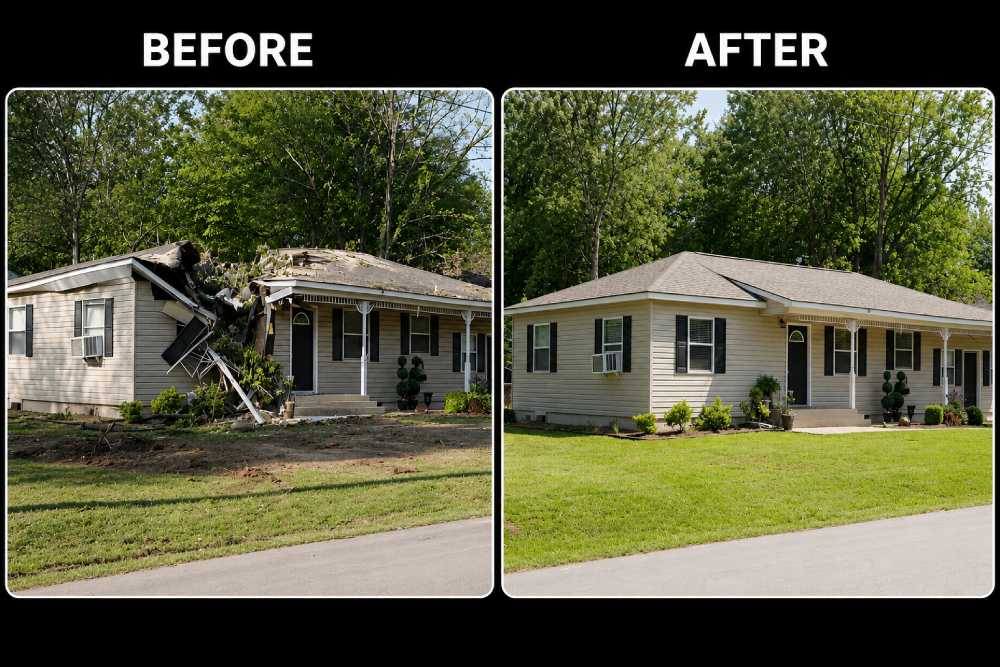
A distressed property is a home under financial or physical stress, from foreclosure risk to fire damage. Traditional buyers struggle to purchase these homes because lenders won’t finance them, so most sell to cash buyers. This guide explains what qualifies as distressed, how cash offers actually get calculated, what makes New York different, and how to avoid the scammers who target sellers in tough spots. Written by buyers who’ve purchased over 1,000 homes.
Most guides about how to sell distressed property for cash are written by marketers who’ve never stood in a flooded basement with a seller. We’re going to do this differently. Our team has bought and flipped more than 1,000 homes across Long Island over nearly 20 years, and this article explains the process from the other side of the table. What we look at. How we build an offer. Where sellers get taken advantage of.
Here’s the thing most homeowners don’t realize: cash sales aren’t some fringe backup plan. The National Association of Realtors reports that 27% of all home sales are cash transactions. For distressed homes, that share climbs much higher, because cash is often the only kind of buyer these properties can attract.
By the end of this guide, you’ll know exactly how a distress sale works, what a fair cash offer looks like, and how to tell a real buyer from a con artist. Let’s get into it.
What Is a Distressed Property?
A distressed property is a home under pressure that forces a sale, and the pressure comes in two forms. Financial distress means the owner can’t keep up, as with missed mortgage payments or unpaid taxes. Physical distress means the house itself is the problem, from failed roofs to fire damage. Many homes have both.
The term “distress sale” comes from finance. Investopedia defines a distressed sale as one where the owner must sell urgently, usually at a loss, to cover debts or emergencies. Lenders and investors use the cousin term “distressed asset” for the same idea. The label sounds cold, but behind almost every distressed home is a very human story.
In our two decades buying houses, these are the situations we see most:
- Pre-foreclosure. The owner has missed payments and the lender has started the legal clock. The house may be fine. The mortgage isn’t.
- Inherited and probate properties. A family member passes, and the heirs get a house with 20 years of deferred repairs and their own lives in another state.
- Major damage. Fire, storm flooding, a collapsed sewer line. Insurance rarely covers the full gap, and lenders won’t finance the wreck.
- Code violations and open permits. Unpermitted work or violation liens that block a normal closing until they’re cured.
- Vacant houses. Empty homes deteriorate fast, and they get expensive to insure while they sit.
- Hoarding situations. Sometimes the hardest part of a sale isn’t the structure at all. It’s the contents.
- Tired landlords. A rental with problem tenants, back rent, code letters, and a repair list nobody wants to fund.
Notice what’s missing from that list: shame. Roughly 2% of all home sales nationally are distressed sales, and behind every one is a person who hit a rough stretch. If that’s you, you’re not a failure. You’re a homeowner with a math problem, and math problems have answers.
Why Distressed Homes Are So Hard to Sell the Traditional Way
Distressed homes fail on the open market for one core reason: financing. Mortgage lenders require the home to be structurally sound and insurable, so a house with major safety, title, condition, or paperwork problems can’t pass appraisal or underwriting. That shrinks your buyer pool to people who don’t need a loan at all.
Even when a financed buyer does bite, the deal is fragile. NAR’s Realtors Confidence Index shows 6% of contracts get terminated and another 13% hit delayed settlements, with appraisal problems as a leading cause. Now imagine those odds on a house with a patched roof and a wet basement. We’ve watched sellers lose three financed buyers in a row on the same distressed listing, burning four months each round.
And the clock costs real money. Every month a distressed house sits, you’re paying the mortgage, taxes, insurance, and utilities on a property that’s actively losing condition. A leak that would’ve been a $500 fix in month one becomes drywall, insulation, flooring, and mold by month six. Water damage claims average more than $15,000, and insurers routinely deny the gradual kind that vacant and neglected homes produce.
There’s an emotional cost too, and we’d argue it’s the bigger one. Showings mean strangers photographing the worst room in your house. Repair negotiations mean itemized lists of everything wrong with a home you may have grown up in. Plenty of our sellers tell us the relief wasn’t about money at all.
How Selling a Distressed Property for Cash Works
Selling a distressed property for cash follows four steps: you contact a buyer, they view the property once, you receive a written offer, and you close on your schedule. There’s no listing, staging, showings, or repair work. Reputable buyers purchase as-is and cover typical closing costs, and the sale can close in one to two weeks.
Here’s what the process looks like with a direct buyer like us:
- You reach out. A call or a short online form. You describe the house and the situation honestly, including the ugly parts. The ugly parts don’t scare off a real cash home buyer.
- One walkthrough. We visit once, or review photos and a virtual tour if you’d rather not meet. Nobody asks you to clean.
- A written cash offer, usually within 24 hours. A serious offer comes with no obligation and no pressure to sign that day.
- You pick the closing date. In New York, an attorney handles the closing and a title company clears the paperwork. Fast can mean 7 to 14 days. Slow is fine too, if you need time to move.
Compare that to the standard route. Financed contracts typically take about 30 days to close, and that’s after the weeks or months of prep, listing, showings, and negotiations a distressed home usually can’t survive. A cash deal removes the loan and the appraisal from the equation, which removes almost every way a sale can die.
How Cash Buyers Actually Calculate an Offer
A cash offer starts with the home’s value after full renovation, then subtracts three things: the repair budget, the buyer’s holding and resale costs, and a profit margin for taking on the risk. What’s left is the offer. Any buyer who won’t walk you through that math is hiding something.
Most companies keep this formula vague. We’d rather show you, because sellers who understand the math negotiate better and get scammed less. Here’s a simplified example with round numbers:
- A fully renovated version of the house would sell for $500,000.
- The renovation needs $90,000 in work (roof, systems, kitchen, cleanout).
- Holding and resale costs run about $40,000 (taxes, insurance, utilities, financing, and the commissions we’ll pay when we resell).
- The margin that keeps the business alive and absorbs surprises is around $45,000. Surprises are not rare. Open a wall in a 70-year-old Long Island house and you’ll meet a few.
That produces an offer around $325,000 on this example house. Is that below what a renovated home would fetch? Yes, and any honest buyer says so plainly. The right comparison isn’t the renovated price. It’s what you’d actually net after funding $90,000 of work you may not have, carrying the house for months, paying commissions, and hoping the sale sticks. For many distressed situations, the gap is far smaller than sellers expect. Sometimes selling as-is even comes out ahead. Sometimes it doesn’t, and we’ll get to that.
One more thing we watch for as buyers: a fair cash offer reflects the specific house, not a formula printed off the internet. Two identical-looking colonials can differ by $60,000 in repair costs because of what’s behind the walls. Experience is what prices that gap correctly, and it’s why a buyer’s track record matters as much as their number.
The Real Benefits of Selling a House for Cash
The benefits of selling a house for cash come down to four things: speed, certainty, zero repairs, and zero commissions. You skip the financing chain that kills fragile deals, you sell the home exactly as it sits, and the number on the contract is close to the number you walk away with.
Let’s take those one at a time, because the advantages of selling a house to a cash buyer get repeated so often they’ve turned into wallpaper.
Speed that matches your deadline. A financed sale runs on the lender’s calendar. A cash deal runs on yours. When a foreclosure auction, a tax deadline, a divorce decree, or a job relocation is bearing down, closing in days instead of months isn’t a luxury.
Certainty. No mortgage means no loan denial at week five and no appraisal coming in low at week four. Once a legitimate buyer signs, the sale closes. After watching roughly 1 in 16 financed contracts terminate, we’d argue certainty is the most underrated line in this whole comparison.
True as-is. Not “as-is but fix the roof for the lender.” As-is meaning leave the furniture, leave the contents, hand over the keys. For inherited and hoarding situations, this single point changes everything.
No commissions or hidden fees. Selling direct means no agent commission and, with buyers like us, no closing costs charged to you. On the traditional side, those costs quietly eat a meaningful slice of the price.
There’s a quieter fifth benefit: privacy. No sign on the lawn, no open house, no neighbors walking through. All-cash purchases have hit an all-time high nationally, and part of the reason is that sellers in hard situations put real value on a quiet exit.
Selling a Distressed Property in New York: What Makes It Different
New York gives distressed sellers more time than almost any state. Foreclosure here is judicial, meaning it runs through the courts, and ATTOM data puts New York’s average foreclosure at 1,998 days against a 592-day national average. That long runway is your biggest asset, if you use it.
But here’s the thing about that timeline: it’s not free time. Interest, late fees, legal costs, and property taxes keep stacking against your equity every single month the case drags on. We’ve met homeowners who ignored the process for three years because “nothing was happening,” then discovered the fees had consumed most of what their house was worth. The court’s slow pace protects your roof. It does not protect your money.
If you’re behind on payments in New York, a few protections matter:
- Lenders must send a 90-day pre-foreclosure notice before filing, and federal rules generally stop them from starting until you’re 120 days past due, per Nolo’s summary of New York foreclosure law.
- Courts require mandatory settlement conferences where you and the lender explore alternatives like a loan modification.
- Free help exists. A HUD-approved housing counselor, findable through the CFPB, costs nothing and can walk you through every option.
Selling is one of those options, and it’s available right up until the auction. Sell before the gavel falls and you pay off the loan, stop the fee machine, keep the foreclosure off the final chapter of your credit story, and pocket whatever equity remains. We wrote a full breakdown of what happens after a New York foreclosure, and the honest summary is this: your options before the auction are ten times better than your options after.
One more New York quirk worth knowing: attorneys handle closings here. That’s good news for distressed sellers. A licensed attorney and a title company sit between you and the buyer’s money, which is exactly the structure that makes the scams in the next section harder to pull off.
How to Spot a Legitimate Cash Buyer (and Dodge the Scams)
Legitimate cash buyers show proof of funds, put every number in writing, never charge you upfront fees, and close through an attorney and title company. Scammers do the opposite: pressure, vagueness, fees before closing, or paperwork that transfers your deed while you still owe the debt. When one of those appears, walk away.
Distressed sellers are a scammer’s favorite audience, because urgency makes people skip steps. The FTC warns specifically about mortgage relief and foreclosure rescue schemes that charge upfront fees or trick owners into signing over their homes. In our region we’ve seen sellers approached by “buyers” who were really wholesalers with no money, tying up the house in a contract they hoped to flip to someone else.
Run every buyer through this checklist before you sign anything:
- Ask for proof of funds. A real cash home buyer can show a bank statement or letter dated this month. No proof, no deal.
- Check the local footprint. Years in business, an office you can visit, reviews you can read, and completed projects you can drive past. A track record like 1,000+ purchases can’t be faked with a landing page.
- Never pay a fee to sell. You should receive money at closing, not send it before one.
- Refuse any deed transfer outside a closing. No legitimate transaction asks you to sign the house over “temporarily” or ahead of payment.
- Watch the deposit and the contract. A serious buyer puts down real earnest money and doesn’t bury an escape clause that lets them cancel for any reason on day 29.
- Slow down on pressure. “This offer expires tonight” is a tactic, not a deadline. A fair cash offer survives a day of thinking and a call to your attorney.
None of this is complicated. It just requires doing it while stressed, which is the hard part. Print the list if you have to.
When Selling for Cash Is the Wrong Move
If your house is in decent shape and you can wait a few months, listing with an agent will usually net you more money. Cash buyers exist to solve deadlines and condition problems. When you have neither, don’t pay for solutions you don’t need.
We tell people this on the phone every week, and it surprises them every time. A cash sale is a tool for specific jobs. House needs $10,000 of paint and patience rather than $100,000 of reconstruction? List it. No deadline forcing your hand? List it. Emotionally ready to handle showings and negotiations? List it, and keep our number in a drawer.
The calculation flips when the repair number is big or the timeline is short, and it flips hardest when the situation itself (probate, tenants, violations, distance) makes a retail sale impractical. And if you’re on the fence, do the simple homework: get contractor bids for the repairs, ask an agent for a realistic as-is listing price and timeline, and get a no-obligation cash offer. Three numbers, one honest afternoon of comparison. Homes that are merely tired, not truly distressed, can also often be saved with basic upkeep, which is exactly why we published a full seasonal home maintenance guide for owners who still have time on their side.
Why New York Homeowners Sell Distressed Property to MrCashBuye
MrCashBuyer has bought and resold more than 1,000 Long Island homes over nearly 20 years. We make written cash offers within 24 hours and buy in any condition, with no commissions or fees, closing through New York attorneys on your timeline. Distressed houses aren’t a sideline for us. They’re the entire business.
Our founder, Chris Chiarenza, started this company after seeing how few honest options existed for homeowners in hard situations. Fire damage, code violations, hoarding cleanouts, probate tangles, foreclosure deadlines. We’ve closed on all of them, more times than we can count, which means your situation will not shock us and your house will not scare us.
A few of the situations where we help most:
- Facing foreclosure and needing a sale before the auction date, with enough time built in for the attorney work New York requires.
- A vacant house bleeding taxes and insurance while it deteriorates. We buy vacant houses for cash and stop the bleeding in days.
- A rental gone wrong. We purchase rental properties with tenants in place, and the legal complexities become our problem, not yours.
- An inherited home the family can’t afford to fix and can’t agree on. One as-is closing settles it.
If any of that sounds like your week, request a cash offer at MrCashBuyer or call 631-388-6640. You’ll have a real written number within a day, and whether you take it is entirely up to you.
Distressed Property FAQ
Do cash buyers pay fair prices for distressed homes?
Fair, yes. Full retail, no. A fair cash offer equals the renovated value, minus repairs, minus holding and resale costs, minus the buyer’s margin, and a legitimate buyer will show you each number. The test of fairness is transparency and comparison: get two or three offers plus an agent’s as-is estimate, then judge.
How fast can I actually get paid?
In New York, 7 to 14 days is realistic for a clean title, since attorney review and a title search take a few days no matter who’s buying. Liens, probate, estate paperwork, or open violations add time. The bigger speed gain is skipping the months of prep and financed-buyer delays entirely.
Can I sell a house that’s already in foreclosure in New York?
Yes, at any point before the auction. The sale pays off the mortgage, accrued interest, fees, and legal costs at closing, and you keep the remaining equity. Because New York foreclosures move through courts slowly, most owners have far more selling time than they assume. Start early anyway, since fees grow monthly.
Do I have to clean out the house first?
No. A true as-is buyer takes the property with everything in it, from furniture to a hoarded basement. Take what matters to you and leave the rest. For inherited properties especially, skipping the cleanout saves families weeks of painful work and thousands in hauling costs.
Will I owe taxes after selling a distressed property?
Possibly, but many sellers owe little or nothing. If the home was your primary residence for two of the last five years, federal law lets many owners exclude a large portion of the gain. Inherited homes get a stepped-up basis that often wipes out most gain. Confirm your numbers with a tax professional before closing.
The Bottom Line
A distressed property feels like a trap because every normal exit seems blocked. It isn’t a trap. It’s a house with a math problem, and a cash sale is the tool built for exactly this math: too many repairs, too little time, too much stress. You now know how the offers are built, what New York’s rules give you, and how to spot the fakes, which puts you ahead of almost every seller in this position.
When you’re ready for a real number instead of more research, call MrCashBuyer at 631-388-6640 or request your free, no-obligation cash offer online. One conversation, one written offer, zero pressure.